How To Improve Educational Spaces For The Future
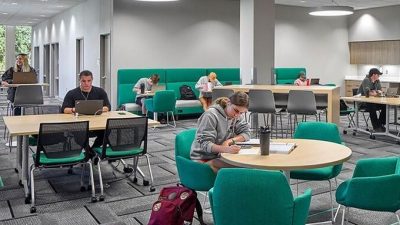
The question of how to improve educational spaces for the future is becoming front and center. Colleges and universities are placing an increased emphasis on their classrooms, study halls, and lounges, with an eye towards attracting and keeping students and staff. The ongoing changes in higher education create multiple opportunities for better comfort, collaboration, and ergonomics.
Our partners at Haworth® recently posted a list of seven ways to improve educational spaces for the future, and what we can expect to see in higher education facilities. We’ll sum them up briefly here; if you’d like to learn more, we’ve included the link below.
7 Ways to Improve Educational Spaces For The Future
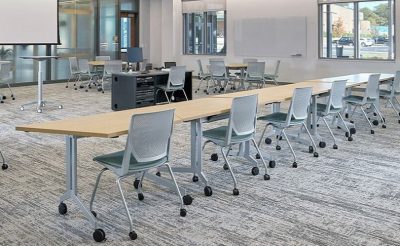 1) Improve Sustainability. Sustainability is becoming a big factor in students’ decision of where to attend college. The Haworth® piece cites a study that states that 30% of students have it as a consideration for where to enroll. Schools can repurpose existing buildings, add geothermal heating and solar panels, use sustainable materials and more to reduce waste.
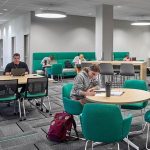
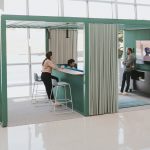
2) Improve Well-Being + Collaborative Spaces. Students are better able to thrive in an environment that encourages collaboration and support. Strategic placement of lounge seating and high top tables can help encourage casual conversations. Study pods and cafes can create spaces for focused work and social engagement.
3) Create Adaptable Environments. Improving educational spaces in the future includes enabling dynamic classrooms and collaborative spaces. Schools can expand classroom capabilities with movable furnishings and walls, raised-access flooring, without the cost of redesign.
4) Adding Creative Hubs. More schools are adding creative hubs and innovational incubators, to encourage hands on learning and exploration of ideas. Advanced technology and flexible layouts enable easier collaboration on future projects.
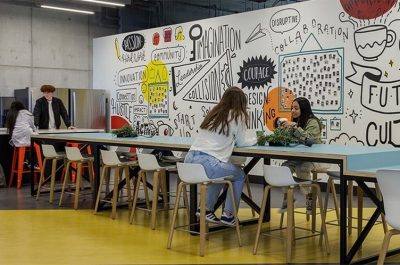 5) Balancing Collaboration and Concentration. Finding space for students to be able to focus in a quiet environment is essential. Using mobile furnishings and adaptable spaces can make it simple to students to both work together and apart in a similar space.
6) Prioritizing Comfort. There are multiple ways to improve an atmosphere in a classroom or collaborative space. Facilities can add wood and stone surfaces, increased natural light, and natural color palettes for an outdoor feeling while inside.
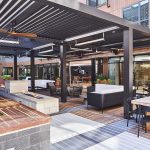
7) Create Space for Recharging. Thoughtful universities let students have downtime to step away from studies and reset. A comfortable lounge area with plenty of natural light, plants and greenery, and ancillary furnishings can help students to relax in the midst of educational challenges.
Are You Planning For Your School’s Future Demands?
When you take steps to improve the comfort, sustainability, and ergonomics of your educational facility, you’re doing more than just attracting top students and staff. You’re helping to create a better environment for creativity and well-being for everyone. Thoughtful, people-focused designs are a key element of improving educational spaces for the future.
If you’re in the greater Philadelphia area or South Jersey, and you’re interested in re-designing your classrooms, lounges, break rooms or other spaces at your place of higher education, reach out to the team at Bellia Interiors Group. We redesign and furnish educational spaces for the future, and help create spaces that students, staff and faculty love.
Click here today to request an absolutely free space evaluation, and let us transform your educational spaces for the better.